
Table of Contents
ToggleThe best travel diaries turn fleeting moments into lasting memories. Whether someone is backpacking through Southeast Asia or road-tripping across the American Southwest, a quality travel diary captures experiences that photos alone cannot preserve. These journals hold handwritten notes, ticket stubs, sketches, and raw emotions from the road. Choosing the right travel diary matters. The wrong one ends up forgotten at the bottom of a suitcase. The right one becomes a treasured keepsake that travelers revisit for years. This guide covers why travel diaries remain valuable, what features to prioritize, and which options stand out in 2025.
Key Takeaways
- The best travel diaries balance portability, paper quality, and durable covers to withstand the demands of life on the road.
- Writing by hand in a travel diary improves memory retention and captures sensory details that photos often miss.
- Look for features like lay-flat binding, 80gsm or higher paper weight, and page designs that match your journaling style.
- Top picks for 2025 include the Leuchtturm1917 A5, Moleskine Voyageur, Traveler’s Company Notebook, and Rite in the Rain for wet conditions.
- Build a consistent journaling habit by writing daily, including physical artifacts like ticket stubs, and embracing imperfection.
- The best travel diaries become treasured keepsakes that let you relive trips and remember details you’d otherwise forget.
Why Keep a Travel Diary
Travel diaries serve purposes that go beyond simple record-keeping. They help travelers process experiences in real time. Writing about a place forces deeper observation. Instead of snapping a quick photo and moving on, journaling encourages people to notice details, the smell of street food, the sound of church bells, the way afternoon light hits an old building.
Memory research supports this practice. Studies show that writing by hand improves memory retention compared to typing or passive observation. A travel diary becomes a personal archive that captures what the mind might otherwise forget.
These journals also provide creative outlets. Many travelers sketch, paste in ephemera, or experiment with different writing styles while on the road. The best travel diaries accommodate this creative freedom with varied page layouts and durable paper.
There’s a practical benefit too. Travel diaries help people track expenses, remember restaurant recommendations, and record contact information for new friends. Months or years later, these details prove surprisingly valuable when planning return trips or sharing advice with others.
Finally, travel diaries offer a digital detox. In an age of constant connectivity, putting pen to paper provides a break from screens. It creates space for reflection that scrolling through social media simply cannot match.
Features to Look for in a Travel Diary
Not all travel diaries work equally well on the road. Several features separate excellent options from mediocre ones.
Size and Portability
The best travel diaries fit easily into daypacks, purses, or jacket pockets. A5 size (approximately 5.5 x 8.5 inches) offers a good balance between writing space and portability. Smaller pocket-sized options work better for minimalist travelers who write brief daily notes.
Paper Quality
Paper weight and texture matter more than many buyers realize. Thin paper bleeds when users write with fountain pens or markers. Quality travel diaries use paper rated at 80gsm or higher. Some premium options feature 100gsm paper that handles watercolors and brush pens without buckling.
Binding Style
Lay-flat binding makes writing easier, especially in cramped spaces like airplane tray tables or café corners. Spiral-bound travel diaries fold completely flat but may snag on bag contents. Thread-bound or smyth-sewn journals combine durability with smooth page-turning.
Cover Durability
Travel diaries face rough conditions. They get shoved into overstuffed bags, splashed with rain, and dropped on hostel floors. Hardcovers protect pages better than soft covers. Leather and faux-leather covers age well and resist moisture. Some travelers prefer fabric covers for their lighter weight.
Page Design
Blank pages offer maximum creative freedom. Lined pages suit those who primarily write text. Dotted grids provide subtle structure for both writing and sketching. The best travel diaries often include mixed page types or offer multiple versions to match different preferences.
Top Travel Diaries Worth Considering
Several travel diaries have earned strong reputations among frequent travelers. Here are standout options across different categories.
Leuchtturm1917 Medium A5 Notebook
This German-made journal remains a favorite among travel diary enthusiasts. It features numbered pages, a table of contents, and an envelope pocket in the back for storing loose items. The 80gsm paper handles most pens without bleeding. Available in dozens of colors with dotted, lined, or blank pages.
Moleskine Voyageur Traveller’s Notebook
Moleskine designed this travel diary specifically for trips. It includes sections for planning, journaling, and collecting contacts. The larger format provides ample writing space. Travelers appreciate the multiple bookmark ribbons and expansion pocket.
Traveler’s Company Traveler’s Notebook
This Japanese system uses a leather cover that holds multiple thin refill notebooks. Travelers can customize their setup with different inserts, lined paper, blank sketching pages, weekly planners, or zip pouches. The leather develops a unique patina over time. It’s become a cult favorite among serious travel diary keepers.
Field Notes Memo Books
For ultralight travelers, these small pocket notebooks offer simplicity and affordability. Sold in three-packs, they’re easy to replace when filled. The rugged covers survive pocket carry well. Many travelers use one per trip or destination.
Rite in the Rain All-Weather Notebook
Adventure travelers who face rain, humidity, or wet conditions benefit from this waterproof option. The treated paper repels water and works with pencils and certain pens even when wet. Ideal for hiking trips, kayaking adventures, or tropical destinations.
How to Make the Most of Your Travel Diary
Owning a great travel diary means little without consistent use. These strategies help travelers build lasting journaling habits.
Write Daily, Even Briefly
Consistency matters more than length. Five minutes of nightly writing captures details while they’re fresh. Waiting until the end of a trip leads to forgotten moments and generic summaries.
Include Sensory Details
The best travel diary entries go beyond “visited the museum, ate dinner.” They describe how the coffee tasted, what the market smelled like, and how exhausted legs felt after climbing temple steps. These details bring entries alive years later.
Paste in Physical Artifacts
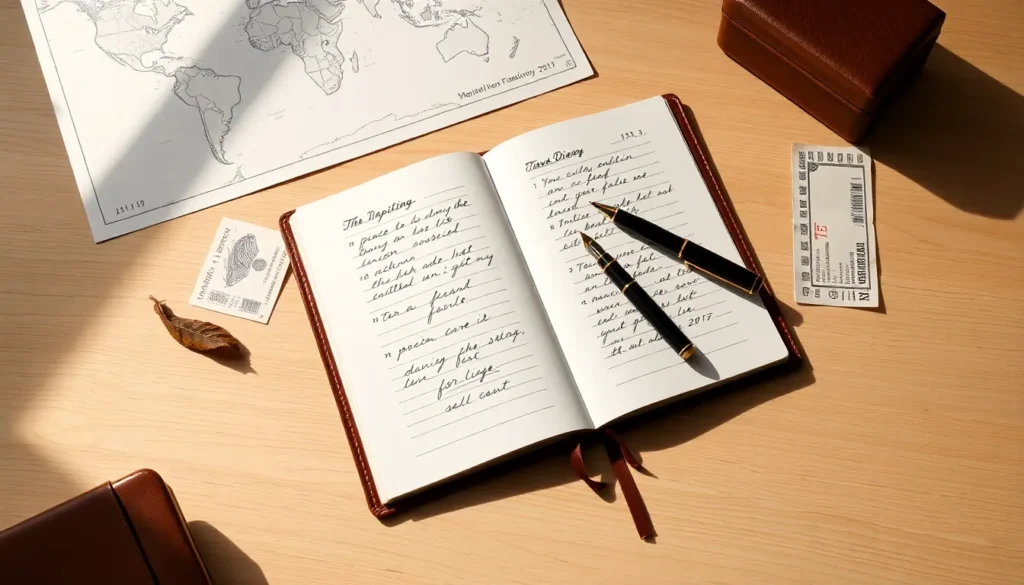
Ticket stubs, napkin sketches, pressed flowers, and business cards add texture to travel diaries. Many travelers carry a small glue stick or washi tape specifically for adding ephemera.
Try Different Formats
Bullet points work for busy days. Long-form paragraphs suit reflective evenings. Quick sketches capture scenes faster than words. Maps, lists of overheard conversations, or expense logs all belong in travel diaries. There’s no single correct approach.
Don’t Edit Too Much
Travel diaries aren’t meant for publication. Messy handwriting, crossed-out words, and unfinished thoughts add authenticity. Perfectionism kills many journaling habits before they start.
Review Previous Entries
Rereading old travel diaries before new trips sparks ideas and reminds travelers of past lessons. Many people discover they’ve forgotten entire experiences until journal pages bring them back.


